Straddling the border between Zambia and Zimbabwe, Victoria Falls-known locally as Mosi-oa-Tunya, The Smoke That Thunders
— stands as one of the planet’s most awe-inspiring natural masterpieces. Stretching an immense 1,708 meters across the mighty Zambezi River and plunging 108 meters into the churning Batoka Gorge, the falls generate a resounding roar and an ethereal plume of mist that can tower more than 300 meters above the forest canopy. Rainbows shimmer continuously in the spray, while full-moon nights reveal rare lunar bows—ghostly arches of pale light that feel almost supernatural.
First documented by Scottish explorer David Livingstone on November 16, 1855, the falls stirred in him a sense of reverence that still echoes today: Scenes so lovely must have been gazed upon by angels in their flight. For modern travellers, Victoria Falls offers not only this same sense of wonder, but also an invigorating blend of adventure, culture, wildlife, and serenity unrivalled anywhere else on earth.
General Information
Victoria Falls can be visited from two vibrant gateway towns: Victoria Falls (Zimbabwe) and Livingstone (Zambia). Each side offers distinct perspectives— Zimbabwe provides sweeping panoramas of the Main Falls, while Zambia offers intimate, close-up encounters with the Eastern Cataract and dramatic knife-edge viewpoints.
A visa is required for most nationalities, though the popular KAZA Univisa streamlines cross-border travel between the two countries for up to 30 days. The falls themselves are protected as a UNESCO World Heritage Site, celebrated for their geological significance. Carved over millennia through resilient basalt, the gorge channels the mighty river into the turbulent Boiling Pot, while the historic Victoria Falls Bridge, completed in 1905, spans the chasm with architectural elegance and hosts some of the world’s most iconic adventure activities.
The surrounding landscape is a lush mosaic of riverine forest and African woodland where wildlife thrives—hippos wallow, crocodiles warm themselves on sun-baked banks, and the Zambezi’s currents carve their way toward the Indian Ocean.
When to Visit
Victoria Falls transforms dramatically with the seasons, offering unique experiences throughout the year:
February–May (High Water)
This is the falls at their most commanding—powerful, thunderous, and enveloped in mist so thick it can drench visitors instantly. It’s a time for sensory immersion rather than panoramic photography. Rainbows bloom constantly in the haze.
July–October (Dry Season)
Water levels recede, revealing the underlying rock formations and offering unparalleled clarity. This season is ideal for photography, white-water rafting, game viewing, and visits to Devil’s Pool on the Zambian edge of the falls.
November–December (Transitional Period)
The flow dips to its lowest point, making it perfect for Livingstone Island tours, swimming at Devil’s Pool, and exploring viewpoints typically obscured by mist. Occasional early rains refresh the landscape.
Climate:
The region enjoys a subtropical climate. Expect hot, humid conditions during the wet season (November–March), with afternoon thunderstorms a dramatic and welcome relief. The dry winter months (May–August) offer crisp mornings, warm sunny days, and cool nights—ideal for outdoor exploration.
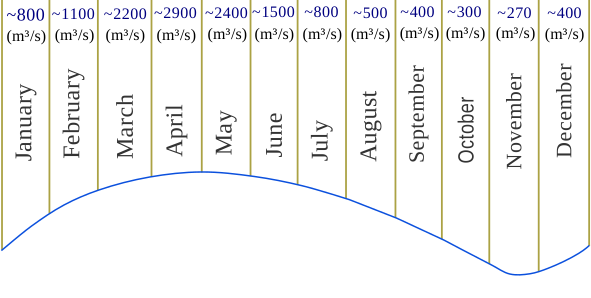
Typical Zambezi River Flow at Victoria Falls (Estimated Monthly Pattern)
- Jan
- ~800 | Start of rainy season— flows rising
- Feb
- ~1,100 | Rainfall increasing, river swells
- Mar
- ~2,200 | Near peak flow as rains peak
- Apr
- ~2,900 | Highest average flow of year
- May
- ~2,400 | High flow continues, begins to reduce
- Jun
- ~1,500 | Water dropping after rains
- Jul
- ~800 | Mid dry season, steady decline
- Aug
- ~500 | Lower flows, falls clearer
- Sep
- ~400 | Typical low dry-season flows
- Oct
- ~300 | Lowest of the year before rains
- Nov
- ~270 | Still low, begins rising late month
- Dec
- ~400 | Rising with onset of rains
Climate summary table for Victoria Falls showing average daytime high, average nighttime low temperatures averages.
- I 30.6°C │ 19.5°C
- II 30.3°C │ 19.2°C
- III 30.7°C │ 13.3°C
- IV 30.3°C │ 15.6°C
- V 28.5°C │ 11.0°C
- VI 26.0°C │ 7.5°C
- VII 26.0°C │ 7.1°C
- VIII 28.8°C │ 9.9°C
- IX 32.8°C │ 14.8°C
- X 34.3°C │ 18.8°C
- XI 33.2°C │ 19.7°C
- XII 31.1°C │ 19.6°C
October is the hottest month (34.3°C daytime!)
June–July are the “winter” months – still sunny and pleasant during the day (26°C), but nights drop to ~7°C → pack a jacket!
From September to March it’s consistently hot to very hot.
Night temperatures are comfortable year-round except May–August when they get properly chilly.
Recent History and Tourism
Tourism around Victoria Falls has grown steadily in the past decade, rebounding strongly after global disruptions. Both Zimbabwe and Zambia have invested in sustainable tourism models, focusing on eco-friendly accommodation, wildlife conservation, and community-driven enterprises that support local livelihoods.
Livingstone has blossomed into a stylish adventure hub, with new lodges and revitalized riverfront developments. Across the river, Zimbabwe’s Victoria Falls town has modernized while preserving its historical charm—evident in landmarks like the century-old Victoria Falls Hotel. Conservation groups are also working to safeguard the falls’ delicate ecosystem from climate-related fluctuations, helping ensure this natural wonder remains spectacular for generations to come.
Wildlife
The ecosystems surrounding Victoria Falls offer a safari experience in miniature, blending riverine and woodland habitats rich in wildlife. Large elephant herds roam the Zambezi River corridor, often seen bathing or crossing at dusk. Hippos grunt from the shallows, crocodiles glide through the current, and troops of chacma baboon (Papio ursinus) and vervet monkeys (Chlorocebus pygerythrus) animate the forest trails.
Bird enthusiasts can spot more than 400 species: the vibrant Schalow's turaco (Tauraco schalowi), the rare Pel's fishing owl (Scotopelia peli), and soaring raptors patrolling the gorge. Nearby parks—Zambezi National Park and Mosi-oa-Tunya National Park—provide opportunities to encounter the Big Five and endangered species like African wild dogs. Ethical conservation sanctuaries offer guided walking experiences with orphaned or rehabilitated wildlife.
Activities
Victoria Falls is synonymous with adventure. Here, the pulse of the Zambezi infuses every experience with excitement:
- Guided Falls Tours: Explore rainforest pathways, stopping at classic viewpoints like Knife Edge Bridge, Danger Point, and the Devil’s Cataract.
- Aerial Excursions: Helicopter “Flight of Angels” tours and microlight flights reveal breathtaking panoramas and the sheer scale of the gorge.
- Bungee Jumping & Gorge Swinging: Leap from the historic bridge or soar across the canyon—signature thrills for adrenaline seekers.
- White-Water Rafting: Navigate some of the world’s most intense Class V rapids, especially exhilarating from August to December.
- Devil’s Pool: From September to December, swim at the very edge of the falls on Livingstone Island—an unforgettable, heart-pounding experience.
- Cultural Experiences: Enjoy traditional boma dinners, visit local villages, or attend performances that celebrate regional heritage.
- Safari & River Cruises: Sunset cruises, game drives, canoe safaris, and bush walks provide peaceful wildlife encounters amid golden light.
Accommodations
A variety of lodging options cater to every style of traveller:
Zimbabwe:
- The Victoria Falls Hotel – A grand, colonial-era landmark exuding charm and offering panoramic views of the bridge.
- Victoria Falls Safari Lodge – Known for its dramatic location overlooking a busy wildlife waterhole.
- Matetsi Victoria Falls – Ultra-luxurious suites with private pools and access to a private game reserve.
Zambia:
- The Royal Livingstone Hotel by Anantara – Riverside elegance where zebras freely wander the lawns.
- The David Livingstone Safari Lodge & Spa – Perfect for relaxation, spa indulgence, and sunset river cruising.
- Avani Victoria Falls Resort – Family-friendly, affordable comfort only steps away from the falls.
Budget-friendly lodges, hostels, and campsites are also plentiful on both sides of the border. Many properties embrace sustainability, supporting local employment and environmental stewardship.
Here are some of the coolest nuggets about the place
- 🌊 1. It’s one of the largest waterfalls on Earth — by sheer curtain of water.
- Not the tallest, not the widest, but the biggest continuous sheet of falling water. When it’s in full flow, it looks like the planet just split open.
- 🌫️ 2. Locals call it
Mosi-oa-Tunya.
-
Means
The Smoke That Thunders.
Which honestly might be the most metal name for anything nature has ever made. - 🌈 3. You get *moonbows
- Yep — rainbows created by moonlight in the spray. You don’t see those in most places; Vic Falls is one of the few spots on Earth where they’re common.
- 🕳️ 4. There’s a literal
Devil’s Pool
on the edge. -
In the dry season, you can swim right up to the lip of the waterfall. It's basically nature saying,
Wanna test your trust issues?
- 🌍 5. It’s a border crossing.
- The falls sit right between Zimbabwe and Zambia — you can walk across the Victoria Falls Bridge and end up in a whole different country.
- 🦁 6. The area is home to the Big Five.
- Elephants, lions, leopards, buffalo, rhinos… you name it. You might see more wildlife in a day than you see traffic lights.
- 🚂 7. The bridge was once part of a fantasy railway plan.
- Cecil Rhodes wanted a railroad from Cape Town to Cairo. That dream didn’t happen, but the Victoria Falls Bridge is a relic of that ambition — and now people bungee-jump off it like maniacs.
- 🌬️ 8. During peak flow, the spray rises over 400 meters.
- That’s high enough that it creates its own mini rainforest around the falls.
- 🌊 9. The falls are slowly
migrating
upstream — this is only its 8th position. - Over the last 100,000 years or so, the Zambezi has eroded through cracks in the basalt rock, abandoning old waterfall positions and carving dramatic zigzag gorges below. There have been seven previous waterfalls, and the current one is retreating westward — the Devil's Cataract is already starting to cut the next one.
- 🌧️ 10. It literally rains 24/7 in the
rainforest
opposite the falls. -
The perpetual spray creates its own microclimate, sustaining a lush, evergreen pocket of jungle where it
rains
every day from the mist falling back down — one of the only places on Earth with constant natural rainfall like this. - 🌀 11. At the base of the First Gorge is the
Boiling Pot.
- Right after the plunge, the river slams into a narrow exit and churns into a massive, swirling whirlpool that looks exactly like water boiling in a cauldron — a hidden, chaotic spot few visitors hike down to see.
- 🐍 12. Locals believe in Nyami Nyami, the Zambezi river god.
- This serpent-like spirit with a fish head is said to protect the Tonga people and control the river's life-giving waters. Legend says he's still down there, separated from his wife by the Kariba Dam upstream — and one day he'll reunite and cause massive floods.
- 🦅 13. The gorges are home to the ultra-rare Taita falcon.
- One of the world's scarcest birds of prey (fewer than 50 breeding pairs known globally) nests on these sheer cliffs — a secret spot for birders, as the dramatic gorges provide perfect hunting grounds for this speedy little raptor.