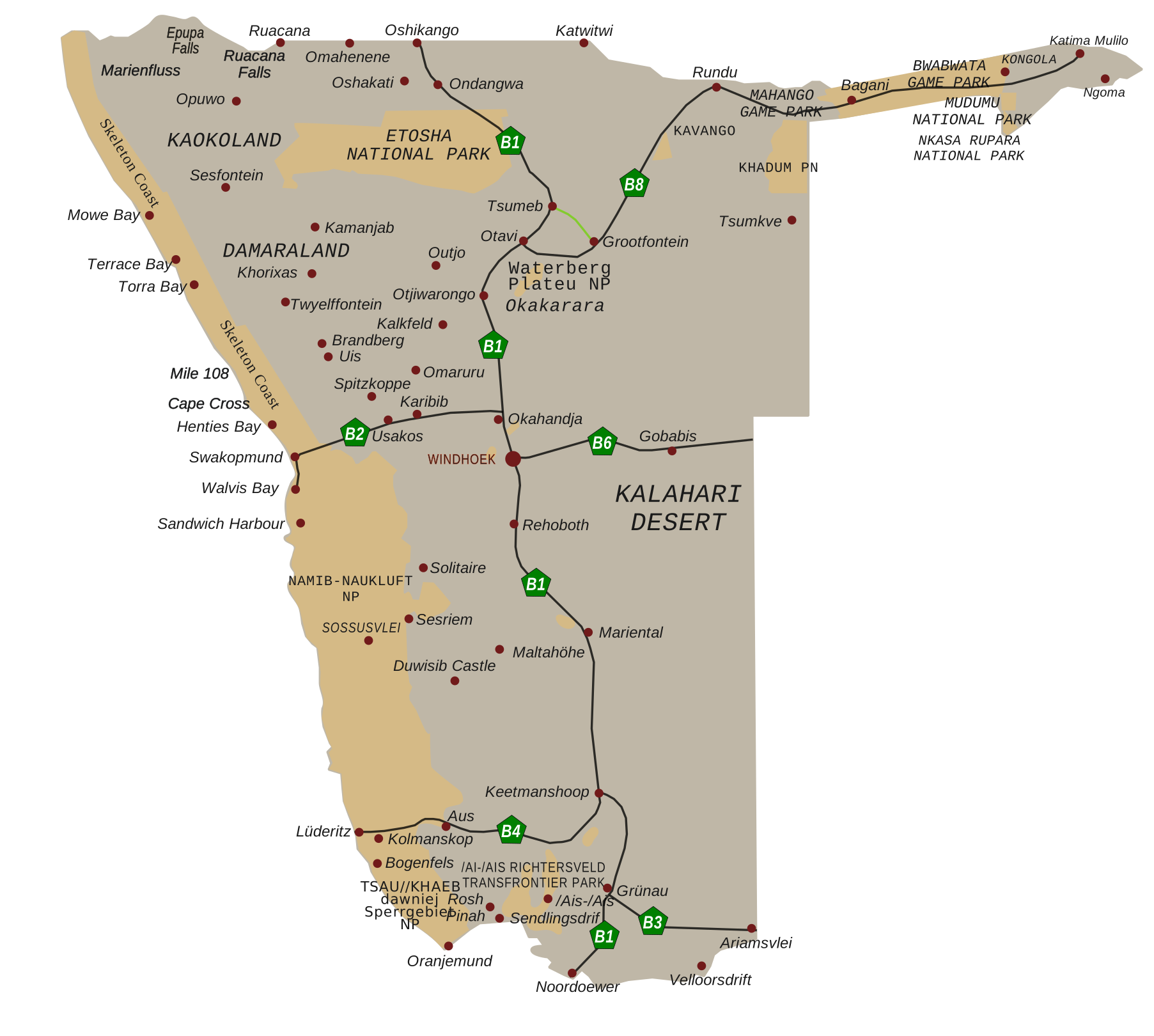
Namibia draws the visitors back time again with its vast open landscapes baked in constant sunshine, abundance of wildlife and intriguing diversity of cultures. Although larger than France and the United Kingdom combined, the country has the population of only 1.6 mln, one of the lowest densities in the world.
This combination allows the visitor to experience a unique blend of adventure , tranquility and unconditional and direct encounter with nature. The most fascinating is the Namib Desert, believed to be the oldest in the world with it's incredible orange dunes built by the wind to the height of more than 100 meters. Start by driving through the desert across the "moon landscape" to Sandwich Lagoon, where pink flamingos soar above golden dunes.
Than move to the coastal towns and enjoy the old colonial charm of Swakopmund and the beautiful lagoon of Walvis Bay, or head back to nature at Cape Cross, where a breeding colony of thousand seals thrives. The wildlife and the National Parks with the most famous - Etosha are breathtaking. In the dry season when the earth seems to shimmer with mirages, the waterholes in the park are like open-air theaters with casts of thousands.
Zebra, wildebeest and gemsbok drink to the trumpeting of elephants and roaring of lions. The cultural diversity of this country is amazing - from the sophisticated 21st century life back to Sun or Himba tribes, who still live like thousands years ago and paint the bodies with the brown mud instead of wearing the clothes. For the adventurous there are bungee jumps over the desert, camel treks, quad biking from the highest dune in the world, desert candle light dinners and many more
.Top Attractions in Namibia
- Etosha National Park- one of Africa's premier reserves, almost 5000 km² in size and mostly dry, with exceptional game viewing concentrated around the Pan and the main water holes. Accommodation is available at Namutoni and Okaukuejo camps.
- Namib-Naukluft Park- a huge desert area containing such sights as the world's largest sand dunes at Soussusvlei, the Sesriem Canyon, the lunar-like landscape along the Welwitschia Drive and the Naukluft Mountains with their steep gorges and sandstone cliffs.
- The Fish River Canyon the second largest in the world, surpassed only by the Grand Canyon. A popular hiking destination.
- Swakopmund - an oasis of German culture and a popular tourist destination with plenty of outdoor activities.
- The Skeleton Coast Park- a long, desolate, eerily beautiful coastline and a graveyard for shipping.
- Kaokoland - arid and remote, among the world's last great wilderness areas
- The Waterberg Plateau Park- high in the mountains, a sanctuary for rare and endangered species of game.
- The Erongo Mountains- fascinating volcanic rock formations in the Omaruru district.
| Field | Information |
|---|---|
| Location | Southern Africa, along the Atlantic Ocean — between Angola and South Africa. |
| Area | 824,292 km² (318,261 sq miles). |
| Land boundaries | Total land boundary length about 3,757 km. |
| Borders | North: Angola, Zambia; East: Botswana; South & East: South Africa; West: Atlantic Ocean. |
| Climate / Topography | Mostly arid to semi-arid; includes the Namib Desert, central plateau, and Kalahari sands. |
| Elevation extremes | Highest point: Mount Brandberg (2,573 m); Lowest point: Atlantic Ocean (0 m). |
| Natural resources | Diamonds, uranium, copper, lead, zinc, silver, tungsten, tin, fish, salt. |
| Land use | Arable land 1%; permanent pasture 46%; other 53%. |
| Irrigated land | Limited; mainly along river valleys and in northern regions. |
| Environmental issues / treaties | Desertification, land degradation, overgrazing, limited freshwater resources, droughts; party to biodiversity and climate treaties. |
| Population (latest estimate) | About 3.18 million (2025 est.). |
| 2025 estimate | Approximately 3.09 million. |
| Population growth rate | Around 2 % annually. |
| Birth rate | About 26 births per 1,000 population. |
| Death rate | About 6 deaths per 1,000 population. |
| Sex ratio | 0.97 male(s)/female (total population). |
| Infant mortality rate | Around 30 deaths per 1,000 live births. |
| Life expectancy at birth | Male ~64.5 years; Female ~68.5 years. |
| Total fertility rate | About 3.4 children born per woman. |
| Ethnic groups | Ovambo, Kavango, Herero, Damara, Nama, Himba, and others. |
| Religions | Predominantly Christian (mainly Lutheran); some indigenous beliefs. |
| Languages | Official language: English; others include Afrikaans, German, Oshiwambo, Nama/Damara, Herero. |
| Literacy | Around 92 % (age 15 and over). |
| Government type | Unitary presidential republic. |
| Capital & seats of government | Windhoek. |
| Administrative divisions | 14 regions. |
| Independence | 21 March 1990 (from South Africa). |
| National holiday | Independence Day — 21 March. |
| Constitution / political structure notes | Multi-party democratic constitution; president is head of state and government. |
| Legal system | Based on Roman-Dutch law and customary law. |
| Suffrage | Universal adult suffrage (at 18 years). |
| Executive branch | President and Cabinet; president elected for five-year terms. |
| Legislative branch | Bicameral parliament — National Assembly and National Council. |
| Judicial branch | Supreme Court (highest), High Court, and lower courts. |
| International organization participation | Member of UN, AU, SADC, Commonwealth of Nations, and others. |
| Diplomatic representation abroad / in country | Maintains embassies and high commissions abroad; foreign missions in Windhoek. |
| Flag description | Blue, red, and green diagonal bands with a gold sun on blue; colors symbolize sky, people, vegetation, and peace. |
| Economy: GDP (nominal) | About US $14–15 billion (2024 est.). |
| Economy: GDP (PPP) | Around US $47 billion (2024 est.). |
| GDP per capita (nominal) | About US $4,000. |
| GDP per capita (PPP) | Around US $15,000. |
| GDP growth / composition | Growth ~3.7 %; key sectors: mining, agriculture, tourism, manufacturing. |
| Inflation rate | Around 3.6 %. |
| Labor force & unemployment | Labor force ~867,000; unemployment ~36.9 %. |
| Budget (revenues / expenditures) | Data not available (approx. balanced with small deficit). |
| Industries / major sectors | Mining (diamonds, uranium, copper), livestock, fish processing, tourism, manufacturing. |
| Electricity production / consumption / trade | Limited domestic generation; imports power from South Africa and the Southern African Power Pool. |
| Agriculture | Mainly livestock; crop farming in irrigated and northern areas; 5–6 % of GDP. |
| Exports / commodities / partners | Diamonds, uranium, copper, beef, fish; main partners: South Africa, Botswana, China, Germany. |
| Imports / commodities / partners | Machinery, fuel, foodstuffs; mainly from South Africa. |
| External debt / debt-to-GDP | Public debt ~70 % of GDP (2024 est.). |
| Currency | Namibian Dollar (NAD), pegged to South African Rand (1:1). |
| Exchange rates | Roughly NAD 17,5 = US $1 (November 2025). |
| Fiscal year | 1 April – 31 March. |
| Communications: telephones / internet | Modern system; mobile coverage nationwide; internet penetration around 50 %. |
| Railways / Highways | Narrow-gauge rail system and ~45,000 km of roads (half paved). |
| Airports | About 120 airports and airstrips; main international airport at Windhoek (Hosea Kutako International). |